
The mathematics of pattern
Where does
a line go?
Trace a route, turn a tile, or see what changes when you protect a region. Three experiments and three source readings explore the paths that make a pattern.
Browse all six journeys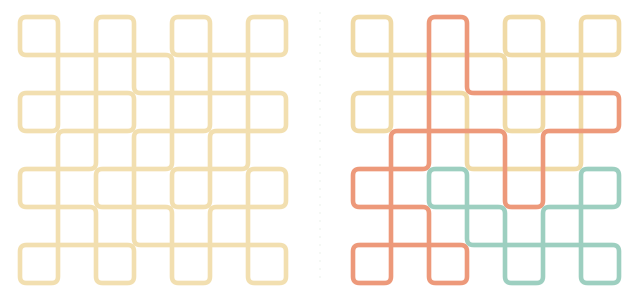
Six ways to follow a line
Open the step-by-step guideMathematical experiments
Grid paths · N6
Compare two grids
Trace two grids that match on all 1,019 counts through triples.
Tile joins · Truchet
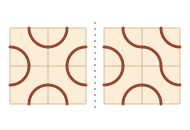
Join two pieces
Turn a tile and predict whether the join closes a loop.

Protected region · Fisher
Keep a region intact
Can you make one symmetric circuit and keep a region’s boundary?
Source readings
Vanuatu · Figure 47
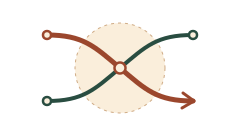
Which branch does the line follow?
Follow the numbered sections through two crossings in a 1934 drawing.

Kolam · Software record
How can six paths share one drawing?
Read six drawing sequences and see how different pairings join paths.
Sona · Figure 5
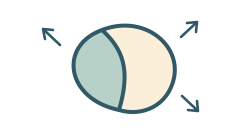
Which region is the outside?
Compare two published figures and see what changes when you choose the outside.
The illustrations introduce the concepts. The guides link to the original sources.
Inside the research studio
Inspect a pattern at the level of its paths, seams and sources, or test a change in a workbench.
Six ways to read a pattern
-
 Kolam · the protected chamberView the plate
-
 Girih · four joined tilesView the plate
-
 Kolam · six source sequencesView the plate
-
 R5J · ADFD collar grammarView the plate
-
 Truchet · an open boundary witnessView the plate
-
 Truchet · a new seam loopView the plate
The thumbnails show the Studio’s retained drawings. Each plate records its source and the scope of the reconstruction.
Browse 20 more studies
Girih
Mirror curves
Braids and fibre identity
Knitting and Laplap
Research
What supports each result?
Browse the research index by question, look up a source or follow the two grids into the mathematical paper.
Browse the research index